How Hypnosis Helps Calm the Mind and Body
A gentle, grounded explanation of how hypnosis works with focused attention, imagery, suggestion, and the mind-body connection to support relaxation and emotional steadiness.
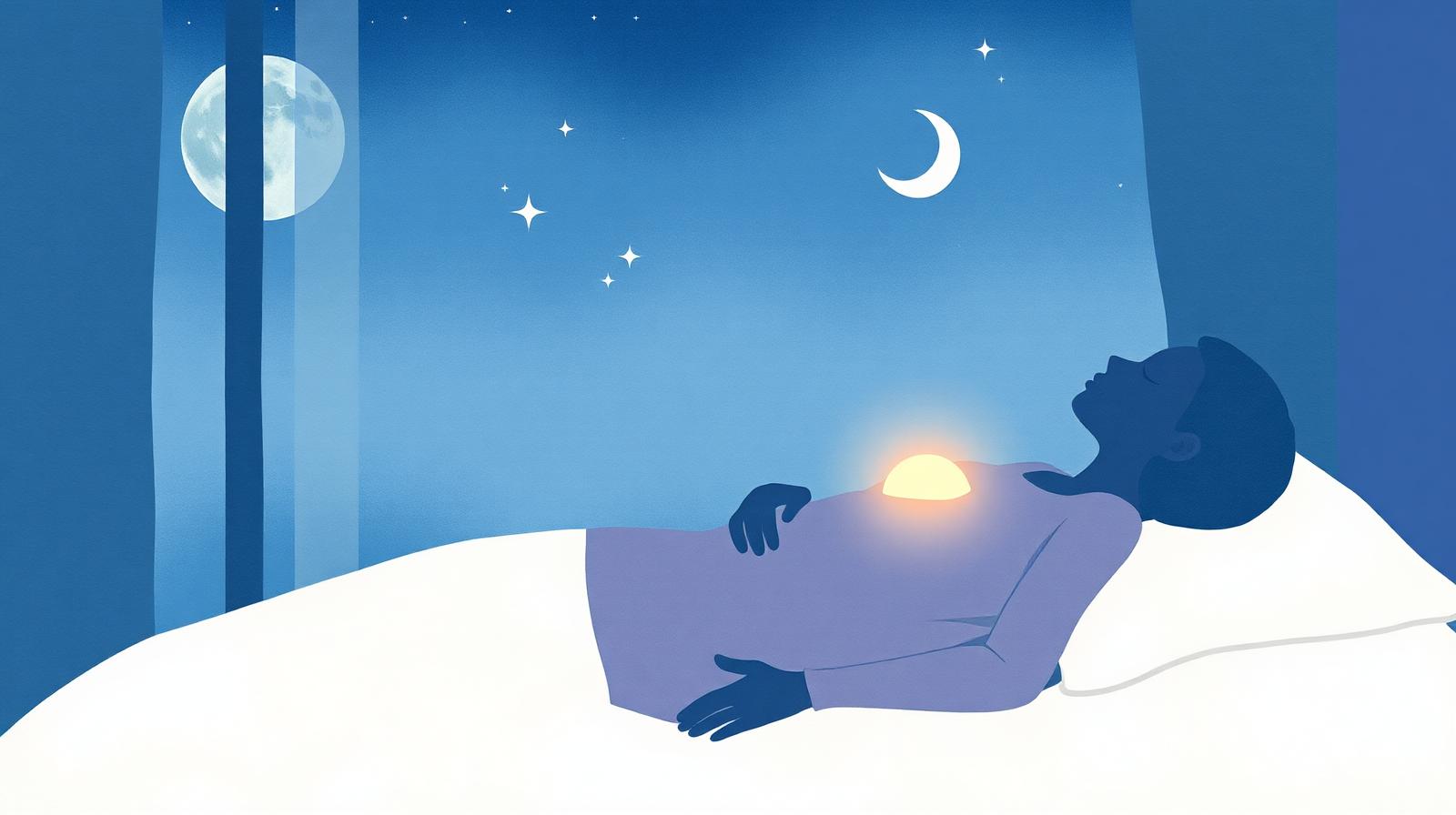
Hypnosis is often misunderstood.
For many people, the word brings up images of stage performances, swinging watches, or someone being “put under.” That version of hypnosis can make the whole topic feel strange, dramatic, or even a little suspicious.
But therapeutic hypnosis is much quieter than that.
It is not about losing control.
It is not about being unconscious.
And it is not about someone taking over your mind.
At its simplest, hypnosis is a state of focused attention, increased relaxation, and greater openness to helpful suggestions. In a supportive setting, hypnosis can help the mind become less scattered and the body begin to soften.
For SomaCalm, hypnosis is used as a gentle audio-based support tool. The intention is not to force change or make big promises. The intention is to help your mind and body move toward calm in a way that feels safe, steady, and repeatable.
What Is Hypnosis, Really?
Hypnosis is a naturally focused state.
You may have experienced something similar while reading a book, driving a familiar route, listening to music, praying, meditating, daydreaming, or becoming absorbed in a movie.
Your attention narrows.
The outside world becomes less important for a moment.
Your imagination becomes more active.
Your body may feel quieter.
You are still aware. You are still yourself. But your attention is gathered in a different way.
In therapeutic hypnosis, that focused state is guided intentionally.
A calm voice, slow pacing, imagery, breath cues, and carefully chosen suggestions help direct attention toward relaxation, safety, comfort, confidence, sleep, emotional steadiness, or another supportive goal.
This is why hypnosis can feel so different from trying to “think your way” into calm.
Instead of arguing with every thought, hypnosis gives the mind something softer to follow.
Hypnosis Does Not Make You Lose Control
One of the most important things to understand is that hypnosis does not erase your will.
You do not become a robot.
You do not have to accept suggestions that feel wrong for you.
You do not lose your values, personality, awareness, or ability to choose.
In fact, most people in hypnosis are aware of what is happening. Some feel deeply relaxed. Some feel focused. Some feel dreamy. Some simply feel like they are resting with their eyes closed while listening to calming words.
All of those experiences can be normal.
The goal is not to reach a perfect trance state.
The goal is to let the mind and body receive support in a quieter way.
Why the Mind Responds to Imagery and Suggestion
The mind does not only respond to logic.
It also responds to images, tone, rhythm, repetition, memory, emotion, sensation, and expectation.
This is why one stressful thought can create body tension.
You imagine something going wrong, and your shoulders tighten.
You replay a conversation, and your stomach knots.
You think about tomorrow’s responsibilities, and your chest feels heavy.
The body often responds to imagined experiences as though they matter.
Hypnosis uses that same mind-body pathway in a gentler direction.
Instead of rehearsing danger, pressure, or self-criticism, hypnosis may guide you to imagine safety, steadiness, spaciousness, warmth, grounding, or rest.
The purpose is not to pretend life is perfect.
The purpose is to give the nervous system a different kind of signal.
How Hypnosis May Help the Body Soften
When the mind is busy, the body often stays braced.
The jaw holds.
The shoulders rise.
The breath becomes shallow.
The hands tense.
The belly tightens.
The body may be trying to protect you, prepare you, or keep you alert.
A calming hypnosis session can help interrupt that loop.
Slow words can slow attention.
Imagery can shift the mind away from threat scanning.
Breath cues can create a gentle rhythm.
Suggestions of safety and support can help the body begin to release unnecessary effort.
This is not magic.
It is a repeated mind-body cue.
The more often the body practices settling, the more familiar that pathway may become.
Hypnosis and the Nervous System
When people talk about calming the nervous system, they often mean helping the body move out of a state of high activation and toward a state that feels more settled, connected, and safe.
Hypnosis may support this process because it often combines several calming elements at once:
- Focused attention
- Relaxation
- Slower breathing
- Soothing imagery
- Repetition
- Positive expectation
- Gentle suggestion
- A sense of inner safety
For someone who feels anxious, overwhelmed, or tired but wired, this combination can be especially supportive.
Instead of trying to force the mind to stop, hypnosis helps guide the system toward a different state.
At SomaCalm, this is why the SomaCalm Method is organized around three simple movements:
- Regulate: help the body settle in the moment.
- Reset: release some of the emotional and mental buildup.
- Rewire: repeat calmer patterns over time through guided practice, sleep support, and subconscious-level cues.
Why Hypnosis Can Feel Easier Than Meditation
Many people who struggle with meditation find hypnosis easier.
Meditation often asks you to observe your thoughts, return to the breath, or sit with what is present. That can be powerful, but it may also feel difficult when your mind is racing or your body is activated.
Hypnosis gives the mind more structure.
There is a voice to follow.
There are images to imagine.
There are phrases to receive.
There is a direction.
For a busy, anxious, overwhelmed, or tired mind, that structure can feel like relief.
You do not have to guide yourself the whole time.
You can let the audio hold the rhythm for you.
Hypnosis, Sleep, and Racing Thoughts
Sleep is one of the places where hypnosis can feel especially natural.
At night, the conscious mind may be tired, but the thinking mind can still be active. You may replay the day, worry about tomorrow, or become frustrated that you are not asleep yet.
Sleep hypnosis gives the mind a softer focus.
Rather than trying to force sleep, the audio gently guides attention toward the breath, the body, calming imagery, and suggestions of rest.
This can be helpful because sleep often comes more easily when the body feels less pressured.
You are not trying to command yourself to sleep.
You are creating conditions that may allow sleep to arrive.
If racing thoughts are a familiar nighttime pattern, you may also find it helpful to read the SomaCalm article on calming racing thoughts at night.
Hypnosis and Emotional Overload
When emotions build up, the mind often tries to analyze everything.
Why do I feel this way?
What should I do?
What if this does not stop?
What if something is wrong with me?
While reflection can be useful, over-analysis can sometimes keep the body activated.
Hypnosis offers a different route.
It may help you notice sensations, soften around them, imagine containment, create distance from overwhelming thoughts, or reconnect with a sense of inner steadiness.
The goal is not to suppress emotion.
The goal is to help emotion move through a body that feels a little more supported.
Sometimes the most helpful first step is not understanding everything.
Sometimes it is feeling safe enough to exhale.
Is Hypnosis the Same as Positive Thinking?
No.
Hypnosis is not simply repeating positive statements.
And SomaCalm does not use harsh “challenge your thoughts” language that can feel invalidating when your body is already overwhelmed.
Instead, hypnosis works best when suggestions feel believable, gentle, and body-friendly.
For example, instead of:
“I am completely calm now.”
A softer suggestion might be:
“My body can soften one small amount.”
Instead of:
“I have nothing to worry about.”
A more supportive suggestion might be:
“I can return to this later. Right now, I am allowed to rest.”
Instead of:
“I am safe forever.”
A gentler phrase might be:
“In this moment, I can notice what is steady.”
The nervous system often responds better to language that feels possible.
Small suggestions can create small shifts.
Small shifts can become familiar.
Familiar calm can become easier to return to.
Can Everyone Be Hypnotized?
People vary in how they experience hypnosis.
Some people feel deeply absorbed right away.
Some feel lightly relaxed.
Some notice images clearly.
Some do not see images at all but still respond to tone, rhythm, and suggestion.
Some people feel like nothing special is happening during the session, only to realize afterward that their body feels quieter.
There is no single correct experience.
You do not have to be “good at hypnosis” for it to be supportive.
It is also okay if your mind wanders. In many sessions, drifting in and out is completely normal. You may hear some parts clearly and miss others. The body can still benefit from the slower rhythm and calming cues.
When Hypnosis May Not Be the Right Fit
Hypnosis is generally considered a supportive wellness practice for many people, but it is not right for every person or every situation.
It is not a replacement for medical care, mental health treatment, trauma therapy, crisis support, or medication when those are needed.
People with severe mental illness, active psychosis, severe dissociation, intense trauma symptoms, or significant emotional instability should seek guidance from a qualified professional before using hypnosis, especially deeper emotional or trauma-related work.
It is also important to stop any audio if it feels distressing, disorienting, or overwhelming.
Your sense of safety matters.
SomaCalm is designed to be gentle, but you are always allowed to pause, skip, or choose a different kind of support.
How to Begin with Hypnosis Gently
If you are new to hypnosis, start small.
Choose a short audio.
Listen when you do not need to drive or focus on anything else.
Let yourself be comfortable.
Do not try to force a trance.
Do not grade your experience.
Simply listen.
Notice whether your breath changes.
Notice whether your shoulders soften.
Notice whether your thoughts slow by even a few percent.
Notice whether your body feels slightly more supported.
That is enough.
A good first step is the Free Stress Reset Toolkit, which includes gentle SomaCalm audio support for stress and nervous system settling.
If you feel activated during the day, Rapid Reset may also be a helpful place to begin.
If you want a fuller library of guided hypnosis audios, sleep support, and structured journeys, you can explore the SomaCalm membership.
A Simple Self-Hypnosis Moment to Try
Here is a gentle one-minute practice.
Sit or lie down comfortably.
Let your eyes rest on one point in the room.
Take one slow breath in.
Let the exhale be a little longer.
Now say silently:
“I do not have to force calm.”
Take another breath.
“My body can soften one small amount.”
Let your shoulders drop slightly.
“My mind can follow something gentler now.”
Imagine a soft light around the heart, the belly, or the hands.
Not bright.
Not dramatic.
Just warm enough to notice.
Then say:
“For this moment, I can let things be simple.”
That is not a full hypnosis session.
But it is the beginning of the same principle:
focused attention, body softening, imagery, and gentle suggestion.
The SomaCalm Approach
SomaCalm uses hypnosis as part of a broader nervous system support approach. You can read more about the science behind hypnosis and mind-body practices that inform this work.
The goal is not to overpower the mind.
The goal is to give the mind and body a calmer path to practice.
Through guided audio, somatic awareness, breath, imagery, and carefully paced language, SomaCalm sessions are designed to support relaxation, emotional steadiness, sleep, and a greater sense of inner safety.
Some sessions are short and practical.
Some are designed for bedtime.
Some support emotional reset.
Some are part of longer journeys.
But the underlying intention is the same:
Help the body settle.
Help the mind quiet.
Help calm become easier to return to.
Begin with One Gentle Audio
You do not have to understand everything about hypnosis before trying it.
You can begin with one short session.
One breath.
One softer phrase.
One moment of letting your body receive support instead of trying to figure everything out.
Hypnosis is not about losing control.
It is about giving your attention a calmer direction.
And sometimes, when the mind has a calmer path to follow, the body can finally begin to exhale.
Sources & Further Reading
Mayo Clinic: Hypnosis — a general clinical overview of what hypnosis is and how it may be used.
National Center for Complementary and Integrative Health: Hypnosis — a plain-language summary of hypnosis research and safety considerations.
NCCIH: Mind and Body Approaches for Stress and Anxiety — an overview of complementary practices, including relaxation techniques, that may support stress and anxiety.
Begin with the Free Stress Reset Toolkit
Gentle, guided practices to help your nervous system settle — free to start.